A cycle has a shape
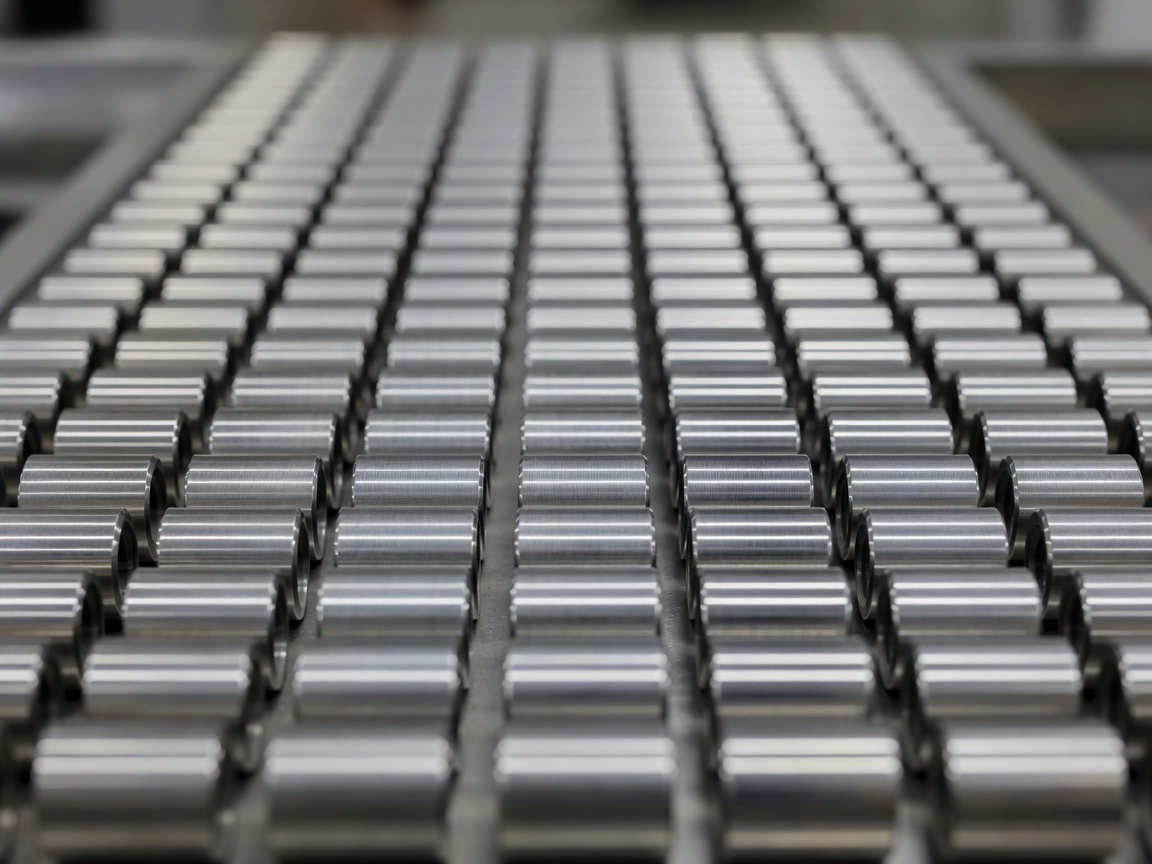
Many production actions can be described as preparation, transformation and release. A blank enters a position, a process changes it, and the result leaves. The stages may overlap in a continuous line, but the viewer often identifies one recurring event as the cycle’s centre.
A fixed camera helps establish that centre. Instead of searching a moving frame, the eye can compare successive outcomes at the same location. A repeated pour might vary slightly at its trailing edge; a cut piece might settle differently each time. Stability gives variation a reference.
This is a description of the viewing situation, not proof of a universal attention mechanism. Familiarity, pace, subject matter and individual preference all affect whether repetition feels absorbing, tedious or uncomfortable. A sequence that invites one viewer to linger may make another want to leave.
Material behaviour supplies the variation
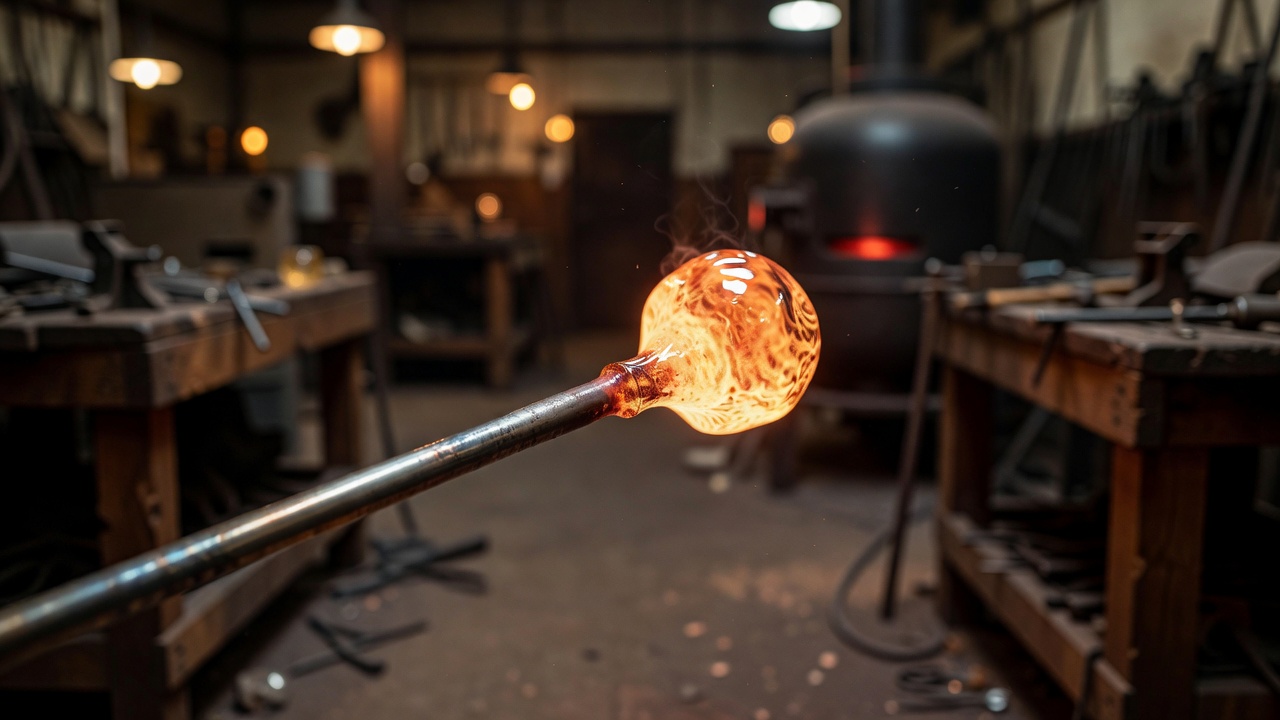
Molten glass gathers and stretches differently from dough. Thread bends differently from sheet metal. Even when machinery constrains an operation, the material can supply small fluctuations in texture, reflection, shape or timing. The process becomes legible through the tension between an expected action and a specific physical response.
The Corning Museum of Glass offers a useful context for glassmaking processes; the Science Museum and the Deutsches Museum provide broader histories of technology and production. Museum interpretation can restore information that a brief clip strips away: energy sources, labour, tooling, maintenance and the purpose of the finished object.
Editing can create a process that never occurred
A seamless loop may join the end of one action to an earlier stage. A reversed clip can make scattered material appear to assemble itself. Speed ramps can make a difficult pause disappear. None of these techniques is automatically objectionable as creative filmmaking, but they change what the sequence can establish.
Watch reference points rather than only the central action. A reflection, background hand or displaced fragment may reveal a join. When the camera angle changes at every difficult stage, continuity becomes harder to evaluate. The most honest description may be “a rhythmic montage of production” rather than “an uninterrupted process.”
Time-lapse raises a related issue. It can reveal changes that are too slow to watch comfortably, but it removes the original duration. A drying surface, growing crystal or settling mixture should not be interpreted as a real-time demonstration unless the timing is clearly stated.
Sound gives the image another clock
A click at the same point in each cycle makes the sequence easier to segment. A scrape, thump or release can mark an event boundary before the visual outcome is obvious. Music can provide a competing rhythm, encouraging us to hear mechanical movements as beats.
But the sound may be edited, replaced or recorded separately. A crisp soundtrack is not evidence that the real environment was quiet or safe. It also does not tell us whether the pace shown is typical. Treat sound as part of the film’s construction unless the production context establishes otherwise.
Try a harmless timing study
Place a few identical paper squares on a table, one at a time, and record the arrangement from a fixed position. Make one version with regular intervals and another with deliberately varied pauses. Keep the objects and framing unchanged. Then describe how your anticipation differs between the two versions.
This exercise does not isolate every variable or produce a scientific finding. It simply makes pacing available for inspection. You may prefer irregularity because it keeps the next event uncertain, or regularity because it is easier to follow. Both observations are more useful than declaring that one rhythm is inherently satisfying.
Remember what the frame leaves out
Production footage can aestheticise work while concealing its conditions. An elegant operation says little about worker autonomy, environmental impact, product quality or maintenance demands. The visual pleasure is real as an experience, but it is not a complete evaluation of the system.
The richest viewing habit holds two thoughts together: this movement has an appealing rhythm, and there is more to understand about how and why it happens. Repetition then becomes a starting point for curiosity rather than an excuse to stop asking questions.
Places to explore processes
Corning Museum of Glass
Science Museum, London
Deutsches Museum, Munich